Sunday, 9 November 2014

Poppies at Remembrance

'Blood soaked lands and seas of red', Paul Cummins.
Remembrance Sunday Sermon

1 Thessalonians 4: 13 But we do not want you to be uninformed, brothers and sisters, about those who have died, so that you may not grieve as others do who have no hope. 
Matthew 25: 13 Keep awake therefore, for you know neither the day nor the hour.

Last week we made a family trip to see the Poppies at the Tower of London.
I don’t know if you’ve had a chance to go and see this installation – evocatively named ‘Blood soaked lands and seas of red’, by artist Paul Cummins.
Since August 3rd each day 1000s of ceramic poppies, with steel stems of between 1 and 50 cms in height, have been ‘planted’ inside the dry moat at the Tower – they now cover an area equivalent to 16 football pitches.
You look down from the railings around the moat to see, not green grass, but red poppies – a sea of crimson that appears to float around the base of the Tower in waves.
It’s quite a sight. Each of the 888, 246 poppies represents a British or Colonial fatality in the First World War and at £25 each (and all already pre-sold) many millions will have been raised for the Royal British Legion.

Why has the poppy come to represent the War dead and Remembrance?
It is a powerful symbol of life lost – red blood – and fragility.
It was Lt. Col. John McCrae who immortalised them in his poem ‘In Flanders Fields’, written in 1915 after the death of McCrae’s friend and fellow soldier, Alexis Helmer, who died in the second battle of Ypres.
According to anecdote the poem was discarded after McCrae was dissatisfied with his attempt. But someone retrieved it and it was published in Punch at the end of the year.
After his poem was published, the women of devastated France began making poppies and cornflowers for the war graves.
A Mme Guerin of the YMCA saw that the poppy could become a universal symbol and took her idea to London, where it was adopted.


Poppies grow best on broken ground' and they flourished in Flanders. Today the poppy remains a universal symbol of bloody death, remembrance and defiant rebirth. It carries with it sadness that men can kill on a scale that we must never forget. It takes this little flower to tell us this. It has become the soldier’s most reliable friend, enduring in times of war and peace. And it unites the country like no other.’

In Flanders fields the poppies blow
Between the crosses, row on row,
That mark our place; and in the sky
The larks, still bravely singing, fly
Scarce heard amid the guns below.
We are the Dead. Short days ago
We lived, felt dawn, saw sunset glow,
Loved and were loved, and now we lie
In Flanders fields.
Take up our quarrel with the foe:
To you from failing hands we throw
The torch; be yours to hold it high.
If ye break faith with us who die
We shall not sleep, though poppies grow
In Flanders fields.
John McCrae, May 1915

The Christian faith has a framework within which death takes its place and is not the final word.
‘If it for this life alone that we have hope, we are more to be pitied than all people’, said the apostle Paul.
We are caught up in a sweep of history in which Christ holds our beginnings and our endings.
The early Christians had a better grasp of eschatology (that is, the things to do with the wrapping up of history) than we do today.
So Paul can say, in our Epistle, ‘we do not want you to be uninformed…about those who have died, so that you may not grieve, as others do, without hope.
He’s not saying we do not grieve – of course those who lose loved ones grieve - especially when they are cut down before their time.
But we do not grieve without hope.
The plan of salvation in Christ has a universal stretch extending back through history, through war and rumours of wars, right up to the present day and beyond, to include our own individual places in it.
When we hear the bugler play the Last Post, we recall that there will be a Last Trump from our God too: ‘For the Lord himself, with a cry of command, with the Archangel’s call, and with the sound of the Last Trumpet, will descend from heaven and the dead in Christ will rise…’

So how do we live in the meantime?
We live with gratitude for those who lost their lives, and continue to do so, in other conflicts around the world, for our freedom.
We live in faith that death is not the end and that e are not without hope.
We live in readiness for Christ’s return, or for our own end, whichever comes first.
We live as informed about Christ – not as those who are caught on the hop, like the foolish bridesmaids of our gospel, who seemed unaware that the bridegroom was coming back.


The poppies at the Tower will be taken away in 2 day’s time.
We can be proud that in our nation Remembrance is alive and well, 100 years after the outbreak of the Great War, and that charities such as the British Legion still support the victims of war.
May we work and pray as those who can make a difference in the world, who long for peace and reconciliation, and who, in the strength of Christ, model those things in our own lives.

We end with a prayerful reflection on the poppy and a request that God will shine his light on us today and always.

'Poppies bring vibrant colour into dark places.
Poppies remind us that our false certainties are frail beyond measure.
Poppies bring memories and reminders
Of past hopes; present dangers and future fears.
As we bring our darkness, bring our certainties, bring our memories
Into the presence of God, The Creator, The Christ, The Comforter,
We seek healing; we seek blessing; we seek peace.
We remember the colourful, frail and human lives cut down in time of War,
And we seek faith in God Who suffers in our broken-ness
And walks with us through The Valley of the shadow of death
Into the wholeness and promise of Resurrection.

Lord shine your light upon us so that we may may see your compass to guide us'.

Amen.

Material in quotation marks provided with the kind collaboration of friend and fellow Christian Colonel Guy Horridge, Airborne Forces.


Friday, 31 October 2014

Hallowe'en Mish Mash

Hallowe'en, like most cultural markings of time, is a mish-mash of the pagan, the religious and the commercial. 

No culture is without its customs surrounding the dead, and Hallowe'en probably goes back to the Pagan Samhain (pronounced Sawain). Samhain was observed as the end of harvest segued into the beginning of winter. It was a liminal time when it was thought the spirits of fairies and of the dead could more easily come into our world. 

In another commemoration, today the Anglican Church remembers Martin Luther, the Protestant Reformer, which is fitting, given my yearly confusion about the difference between All Saints - All Hallows - (November 1st) and All Souls (November 2nd). The Roman Catholic demarcation between saints and souls (the latter still in purgatory) seems churlish, which marks me as an Anglican. The Church of England bravely attempts to navigate this theological and linguistic All Saints/All Souls confusion, though I'm not convinced:

'through baptism we become members (...) of a company of saints whose mutual belonging transcends death (...) All Saints Day and the Commemoration of the Faithful Departed on All Souls Day both celebrate this mutual belonging' (Times and Seasons, p. 537).

The doctrine of purgatory and its associated bi products, for example the selling of indulgences, was attacked by the Reformers and precipitated Luther's posting of his 95 Theses which is widely believed to have sparked the Protestant Reformation. 

Eventually All Saints/All Souls and Hallowe'en became fused into our modern day Hallowe'en, variously approached by Christians as a devilish celebration of all that is evil, necessitating throwing an Evangelical 'Light Party' instead; or as harmless dressing up fun, depending on your standpoint.

I remember the first time two of our kids were invited to go Trick or Treating. They were about 7 and 5 years old and nothing of any Hallowe'en nature had ever crossed our Evangelical Christian threshold.  But then we moved to a village. No Light Party. Strong community.  It seemed churlish to say no to what was nothing more than a well organised short walk around the immediate vicinity where all those to be visited had been phoned and previously agreed to open their doors, when appropriate; and had gone to the trouble of decorating their front rooms and buying half a tonne of sweets for the forthcoming Trick and Treaters. 

We duly raided the dressing up box/make up bag and our two innocents sallied forth in a black cloak and a white sheet respectively. I admit to a moment in the hallway when I had second thoughts - a hurried prayer for protection over them revealed a fear at some deep level that Hallowe'en slides a little bit too near the occult for my liking. Needless to say our tinies returned happy and high on sugar, their (and our) connection with our immediate community strengthened.

Samhain, All Hallows, All Saints, All Souls, Hallowe'en - people will always yearn for some connection with those who have gone before. We can imagine certain things, think we're talking to our dead, or that there's not much difference between prayer to God and prayer to dear auntie Jean, deceased; but the Church holds certain things to be true. We worship a Saviour who has fully experienced death, and come back again. We believe in 'the resurrection of the dead and the life of the world to come'.

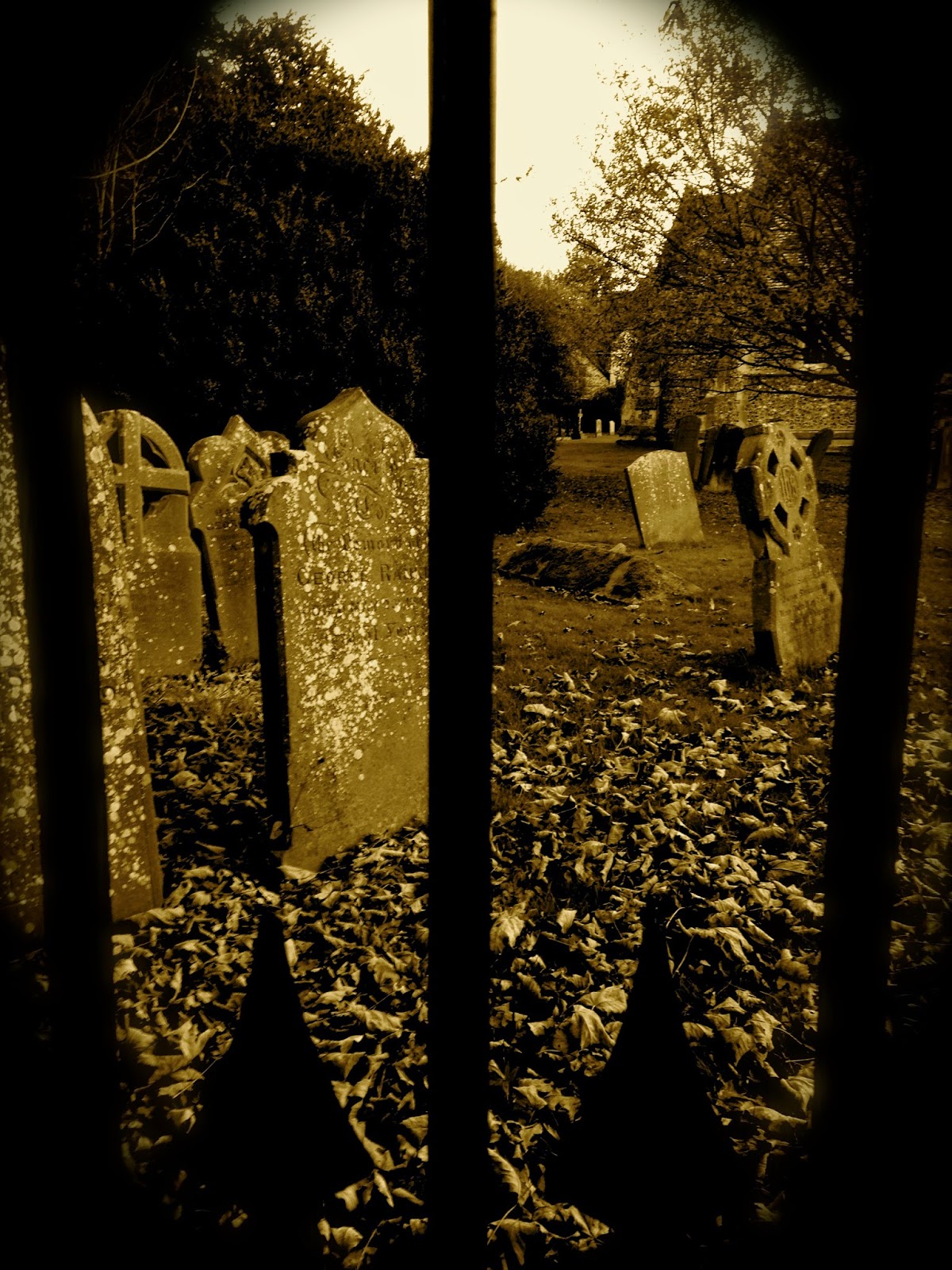
So tonight, not having any tinies any more,  I'll cook, watch TV and go to bed, thinking about Martin Luther's desire for what the Prayer Book calls 'true religion and virtue'. The churchyard at the bottom of my garden will stand quietly, near to a place of prayer where weekly the dead ('the Communion of Saints') are remembered with love, not morbidly. And I'll give thanks for the faithful ministry of Bishop John, today retiring as Bishop of Oxford. Because endings are beginnings. 

And because today, 31st October, Martin Luther Day, 'Hallowe'en'/All Hallows, with its Pagan roots, Christian Protestant/Catholic wrangling and embracing of Trick or Treat culture - is rather an end of season, autumn into winter, liminal, incoherent cultural mish mash of a Day.


Saturday, 18 October 2014

St Luke: love, loss and healing

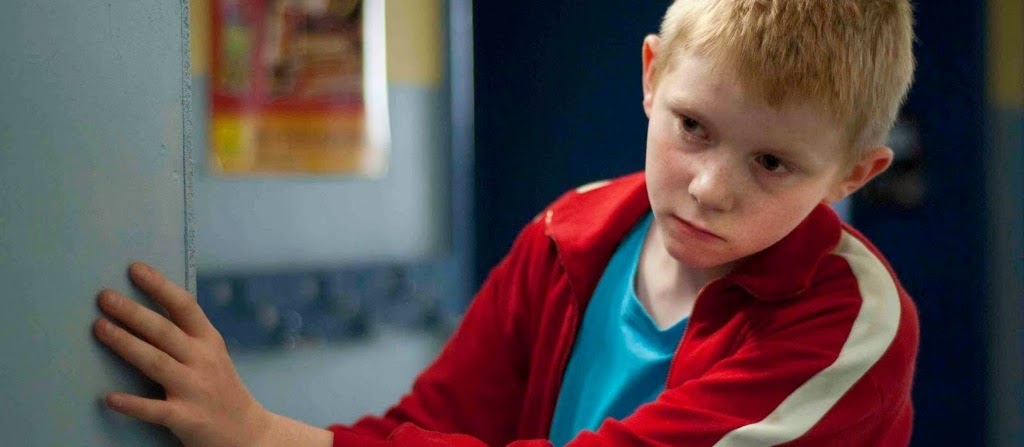
Image: gorillafilmmagazine.com

Today the Church remembers St Luke, writer of the gospel of that name, and of the book of Acts. 

Luke the Physician, healer of bodies, whose subject was Jesus the healer-Saviour.

As a boy's name I hadn't come across Luke much before 1989. That year I taught one in my class. Small, freckled, fair. Quiet, but sharp as a pin. Any teacher will tell you, a name can become loved or loathed, depending on the child. I was probably unconsciously storing them all up for when I might have my own children. There were six Daniels in my first class so that was never a front runner. Robert, Roy and Jason: absolutely no. 

But Luke, yes. Lovely name. 

Luke was one of four. Seven years of age. One day I arrived at the school to be met by a distraught Deputy Head running dangerously fast downstairs from the staff room to tell me, class teacher, that Luke's dad, a part time DJ, had driven at high speed into a tree on the way back from a local disco the night before. He was killed outright. 

Needless to say Luke didn't appear in school for many days. When he did, he was even quieter.

When I finally did have my own boys to name, he was still in my unconscious. We lost a son in stillbirth and when we had another, we gave him Luke as a middle name, after the gospel of Luke, who especially portrays the Healer-Saviour. Because grief can be healed, though it takes a long time. 

The Jesus of Luke has a special place for the sad, the bereaved, and for women. As a famous singer* once sang: 

'Magdalene is trembling,
Like washing on a line,
Trembling and gleaming.
Never before was a man so kind,
Never so redeeming.'

The gospel according to St Luke: Jesus as real, human, vulnerable, not impervious to loss.

I'd love to know what happened to Luke. I hope he grew up to know that he was loved, that this knowledge gave him strength to be everything he could be. He'd be 32 now. Maybe even with his own son. I hope that eventually healing came to lodge there, right in the centre of his life, like a middle name.

*Joni Mitchell, from the album Passion Play.


Saturday, 4 October 2014

A harvest of people


Sermon for Trinity 16. Parable of the wicked tenants.
Matthew 21:33-46 highlighting Verses 41, 43

They said to him, ‘He will put those wretches to a miserable death, and lease the vineyard to other tenants who will give him the produce at the harvest time.’
Therefore I tell you, the kingdom of God will be taken away from you and given to a people that produces the fruits of the kingdom. 


Warning: this is a pre-harvest festival ‘Harvest’ talk, though it’s not about a harvest of fruit and vegetables.


On Wednesday last week some of us met Bishop John on Whitchurch Bridge (in fact we had, not one, not two but THREE bishops on the bridge that afternoon; we were indeed triply blessed).
Pilgrims who had joined him on that day’s section of the Thames path were greeted by school children from Whitchurch Primary and we walked across to a midway point where we were met by school children from Pangbourne – a community that, though a few metres only across the bridge, is in a different County, has a different Local Council, is in a different Deanery and even a different Archdeaconry with a different Area Bishop.
So the Bishop of Dorchester and the Bishop of Reading also met in the middle and surveyed the beauty of the Thames in each direction; and Bishop John blessed the bridge and prayed for all who cross it each day and for those whose work is connected with it.
With blue ribbons being held to signify our fellowship across the Thames divide, and many Diocesan representatives accompanying Bishop John, it felt that we were all one in Christ.
After the lunch, there was a short act of worship for pilgrims continuing up Pangbourne meadow.
During that act of worship, Bishop John challenged us to consider two questions, and to walk the next stretch of the Thames in silence as we pondered them.
The questions were these:
What kind of person would you like to be when you ‘grow up’?
And: What is stopping you from becoming that person?
Several things were suggested: Would you like to be more compassionate, more courageous, more relaxed, more focused, more at peace, less judgmental?
What kind of person would you like to be when you grow up?
And: What is stopping you from becoming that person?

Two very good questions.
They seemed linked to our readings today.
And so I’d like us to think about a similar question now, linked to our reading about the wicked tenants.
What kind of people is God looking for today?
Is he looking for people with a perfect religious pedigree, or for people who will help him bring in the harvest?

Two strong readings today – you might call them uncompromising.
First of all St Paul talks about his religious background and upbringing, which was clearly very intense in its purity.
But it wasn’t enough.
It somehow missed the point.
Is it possible to be so immersed in a religion that we miss the point? It would appear so.
After meeting the living Christ, Paul considers all that special religious background of his as rubbish (a very polite translation of the word, which the KJV renders ‘dung’).
All that learning, all that desire to be a pure Jewish Pharisee, he now considers rubbish (dung) because of the great prize of knowing Christ.
Because knowing Christ puts everything else into a different perspective.
Then in our gospel we have Jesus falling out again with the Pharisees as he tells the parable of the wicked tenants.
Honestly, if the main requisite of being a religious leader were not to fall out with people, Jesus (and Paul for that matter) would have failed many times over.
We’re in Matthew’s gospel again, where Jesus’ teaching on the kingdom of heaven is particularly important.
He tells a parable.
People had by now learned that when Jesus told a parable, you needed to watch out.
Because the parables tended to surprise. And to divide.
People were not stupid: they realized this parable is told against the Pharisees, because Jesus can see where their hatred of him will lead. And they know this. So in his parable of the wicked tenants, he sets out the history of God’s people, and places himself right in the middle of it.

So here’s the tale: A landowner plants a vineyard; puts a fence round it, digs a winepress there, and builds a watchtower in it.
What is the point of this, we may ask?
The whole point is the harvest.
Everything he does points to one end: he wants a crop at the end; he wants a harvest.
He goes away to a different land and rents the vineyard to tenants.
So far, so good.
When harvest comes, he sends his slaves to collect the harvest from the tenants.
This is the point at which the tenants are supposed to hand over the harvest so the owner gets his due; but they beat and kill the slaves and the owner gets nothing.
He sends more slaves; the same thing happens to them.
It’s as if the tenants, not the owner, have assumed ownership and are now doing whatever they please, even thought the vineyard was only loaned to them.
Finally, he sends his own Son, his own heir: surely the tenants will respect him?
But they do not. They seize him and kill him, thinking they can get their hands on the harvest themselves.
At that point, the owner comes back in person.
And Jesus stops the story!
And he asks his hearers what will happen next.

We’re going to do the same, so before we go on I want you just to discuss with your neighbour some of the questions posed by the parable, because a parable is something literally ‘thrown down’ alongside something else, so that one meaning is held up against another. So oblige me for a minute:

Who is the landowner, what is the vineyard; who are the tenants, the slaves and the son? Who are the new tenants who will deliver the harvest? And what is the harvest today?

So, what happens when the owner comes back?
Look carefully at verses 41 and 43.
Given the primary objective of the planting of a vineyard, and if the owner is God, what kind of people is God looking for?
He’s looking for a people who will bring in the harvest.
The religious leaders by and large rejected Jesus, but the ‘stone the builders rejected has become the capstone’ that is, the keystone around which the whole edifice of our faith stands complete.
And today Jesus is calling us to join with him in bringing in a harvest of people.
How, practically, can be we be fully involved as a church with that?

What do we want to be when we grow up?
And what is stopping us from becoming that today?
What kind of people is God looking for today?
Is he looking for people with a perfect religious pedigree, or for people who will help him bring in the harvest?
What or where is the harvest today?