Saturday, 15 March 2014

Sensing Lent 10: Water

A quarter of the way through Lent and today I was thinking about water.

Another physical 'thing' with spiritual suggestions.
Three sprang to mind. 

First, fresh water over stagnant. Jesus stood up in Jerusalem and said 'If anyone is thirsty, let him come to me and drink. The one who believes in me, as the Scripture said, 'Streams from his belly shall flow, of running water' (John 7:37, Nicholas King translation). Flowing, not stagnant, always implying change and being plugged into the source.

Secondly, overwhelming. When water doesn't do what we want it to we all react as though it were possible to completely control nature. It would seem that only Christ was able to do that. The New Testament speaks ominously of the times when people will live in fear of the roaring of the sea (Luke 21:25), which is alarming if you take prophecy seriously. Water was a scary thing when the Thames broke its banks, this winter in the Thames valley and elsewhere. There's only one thing that is desirable when it comes to overwhelming: to be overwhelmed by God.


And thirdly, still waters. As in Psalm 23, 'He leads me beside still waters, for his name's sake'. Still waters are still fresh, they're just not out of control, churned up and chaotic. Still waters imply being settled and peaceful, still and content.  A very spiritually attractive image for life and for Lent.


Friday, 14 March 2014

Sensing Lent 9: Two chairs, the significance of which I do not yet understand


I'm grateful for the church year which provides a special reason to go deeper in Lent. But this is often coupled with feeling personally uninspired and unsure what to 'do' through Lent. I think the year I finally agree with God that some kind of fasting is probably the only way to fit more of God in, I will have arrived. And then need to repent of my pride, and so be back at square one again. 

Today as I was driving more slowly than usual somewhere, I remembered that one year I tried to give up speeding for Lent. Not 100% successful I have to admit. This year I'm not giving anything up, but trying to live more in the moment, using the 5 senses; and theorising less. And trying to blog about it.

I'm not convinced about daily blogging. Ironically you need to carve out time from an already busy timetable to do it and that can end up being counter productive, especially as Lent is supposed to be a time when we slow down and be more aware. At the same time, I've always wanted to be a writer so if that ever 'comes to pass', as it were, at least I'll know what that discipline feels like each day. Because I'm a creature of habit and it's not a problem for me to sit down in the same place at the same time each day and tap out a few hundred words. Radically, today I am in a different font. The Spirit must be at work somehow then.


And I'm reading Richard Rohr. The cover of his 2011 book, 'Falling Upward', shows two chairs at a table (above). One is facing inwards towards the table and the other towards the observer. The one facing the table seems to match it while the other green one, which I find more attractive, doesn't match anything. If Richard Rohr is right in his other writing on the Enneagram (an ancient personality/spirituality model) this is because I am at home at the 'four' position where you have a need to feel 'special'. I like the green chair because it stands out and looks interesting. It looks special. And it looks down on the other chair, which is just ordinary, and no one wants to be just ordinary....or do they...?

But I digress. The thesis of 'Falling Upward' is that we live life in roughly two halves. The first half of life sees us building our outer life - our skills and achievements, education, partner, home, career and maybe family. We think in terms of being upwardly mobile and failure or weakness is to be avoided at all costs. 

Rohr maintains that there is a second half of life though, which we need to embrace if we are to mature; and this is more concerned with discovering that the very things we think make us strong are eventually obstacles to discovering 'real life' (in a spiritual sense). The ego which has been built, needs to be 'unbuilt' to embrace the life of God, which is made perfect in our weakness.

The idea that the things I tend to rely on each day - physical strength, natural gifts and skills, the hope that nothing will go 'wrong' might need to be undone as the second half of life spreads out into the future is rather scary. 'Down' is really 'up', he says. It's like the Beatitudes, I suppose, and I think I follow the idea. I'm still trying to get to grips with his style, which is to sound like a therapist a lot of the time, but I've had a feeling or a while that I should read this book so I'll persevere. And maybe the chair thing will become clearer.

Meanwhile I keep looking at things, including favourite chairs, trying to sense the meaning in things, and listening to the extremely small amount of silence obtainable in this house. And persevering with Lent.

Thursday, 13 March 2014

Sensing Lent 8: Of making many books...


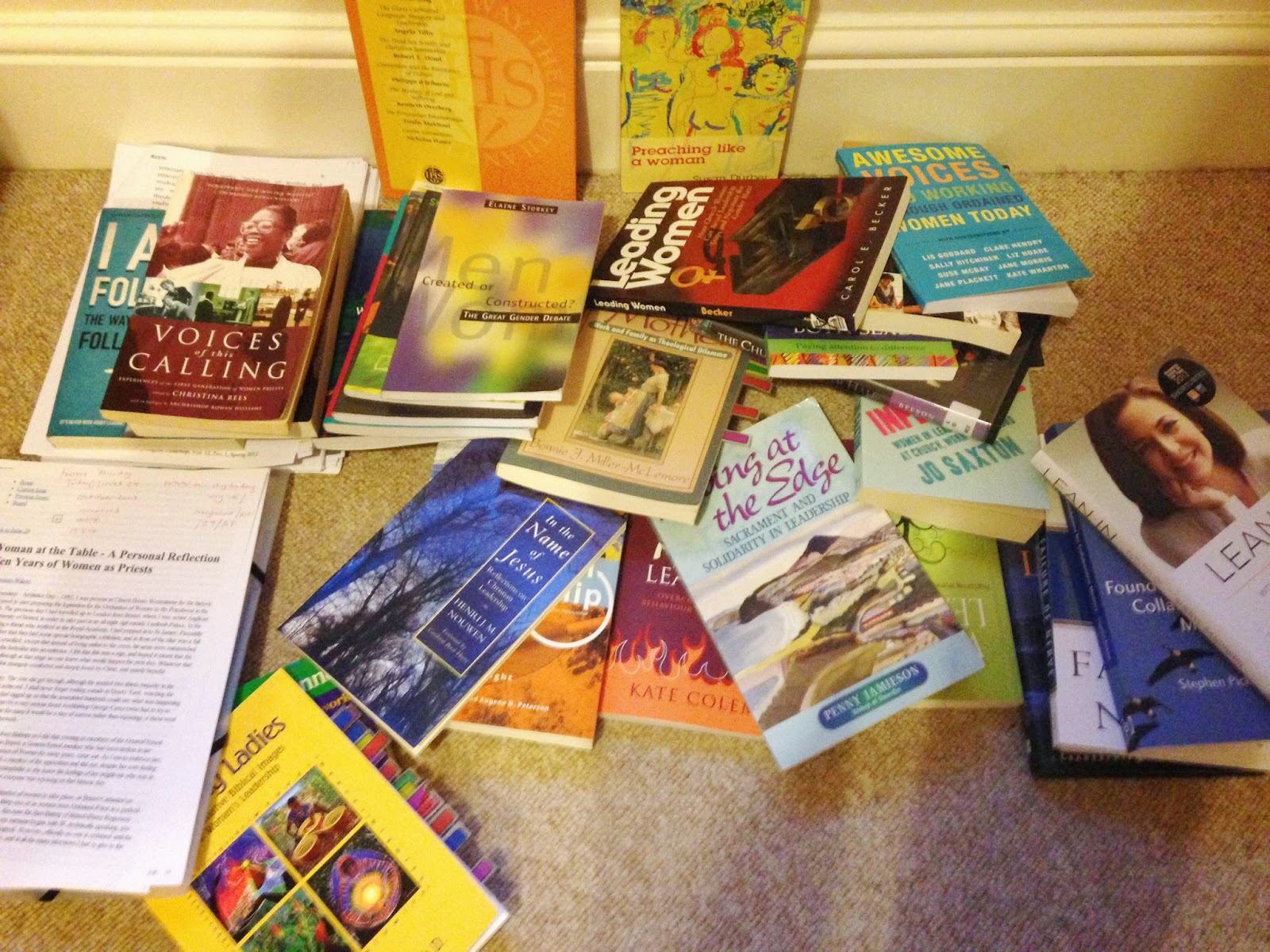
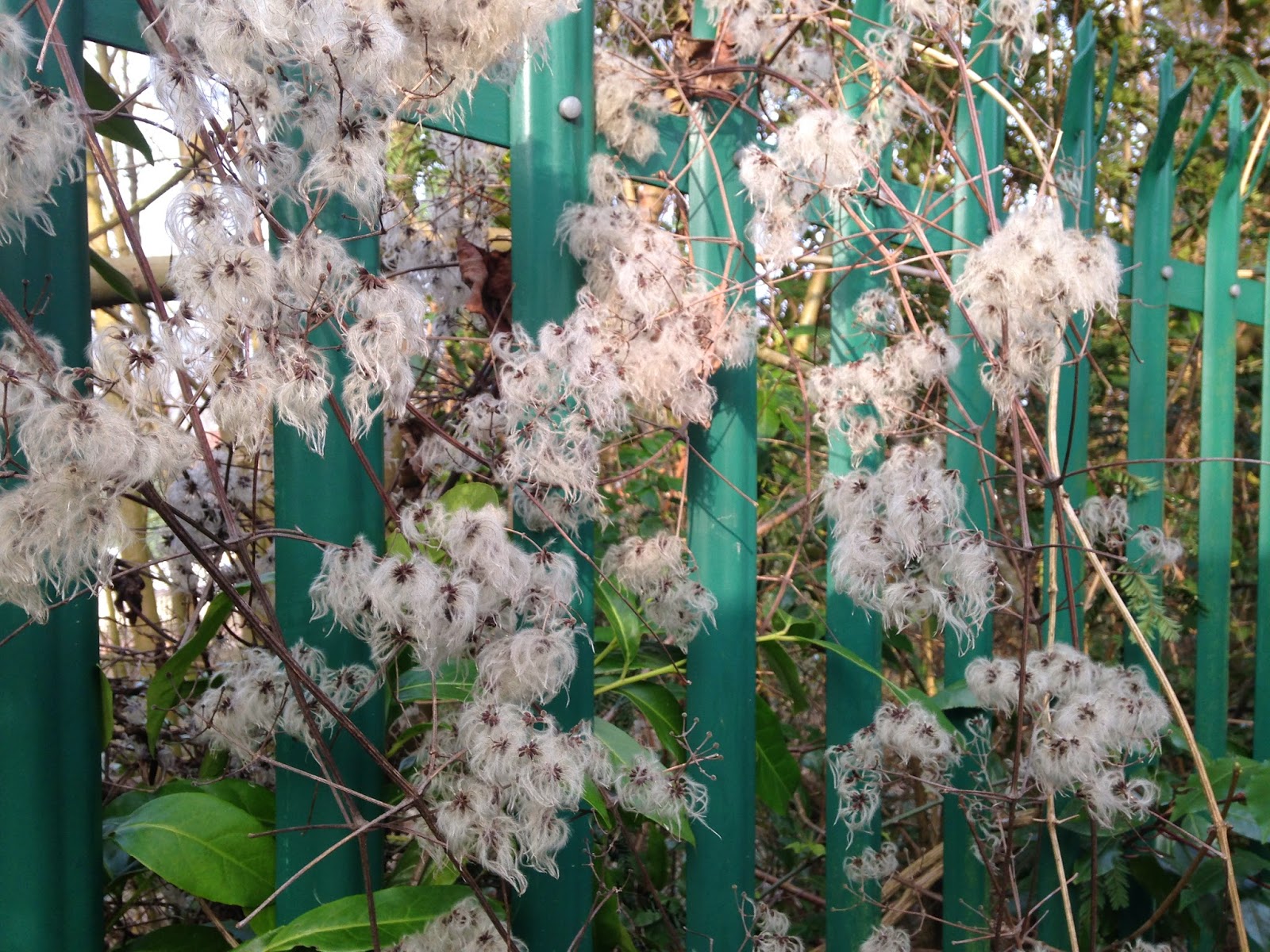
A major wobble today in my attempt to use all the senses in Lent, as it's my Thursday 'study day'...'Of making many books there is no end and much study is a weariness of the flesh' (Ecclesiastes 2:12). How very true. Another time I would love to elucidate the wonders of the above collection as I try and mine the literature of women's experience of leadership. But today what I needed, by 3pm, was to get out and about, walking. It did my brain and soul so much good, walking and observing fencing through which vegetation was poking, or just plain rusty fencing, that I'm wondering if I might be undergoing a personality change this Lent.

By the end of this dissertation I may become someone who prefers fences to feminist practical theology.


Wednesday, 12 March 2014

Sensing Lent 7: Tree

Tree on the banks of the Thames, Pangbourne Meadow.

The tree is a powerful symbol in Christian theology but before we had the tree of life, the tree of the knowledge of good and evil and the tree on which the saviour of the world was hung, there were just trees.

There must be something intrinsic about a tree which lends itself to spiritual illustration. In the 90s we all tumbled to the fact that trees were being aimlessly felled in the rain forest and 'green' issues took off. Planting a tree is seen by religious and non religious people alike as almost an act of goodness; or of remembrance, when someone has died. 

What is it about trees? Apart from being beautiful, there's the visual symmetry and the roles of the different bits: the root which supports the trunk, the branches giving shelter and shade, and the twigs and buds producing flowers then fruit. 

And all in season. Spiritual metaphors abound. We have to be rooted and grounded in love (in God?) or we won't grow spiritually; we are pruned by extraneous stuff being laid down, sometimes through fasting and repentance; and thus we 'bear fruit' that will last - the fruit of a good life etc. It's all in John's gospel, chapter 15.

Trees are so plentiful round here it's hard to imagine the landscape without them, which leads me to today: being as it was the 20th anniversary of the ordination of women in the UK to the Anglican priesthood. 

I had coffee with a fellow female clergywoman and one who is currently in training. It wasn't till we'd ordered and taken seats in the cafe that the significance of being together on this particular day dawned on us, and I left in celebratory mood, giving thanks for the joys and the freedom to minister in this role and calling. 

Fruitful trees and fruitful ministry. A perfect day 7 of Lent.


Tuesday, 11 March 2014

Sensing Lent 6: Bread

We offered this bread today as part of our first Lent Lunch to take place in the new Parish Room. Nobody minded that we're still using Christmas napkins (and our beautiful new Christmas tablecloth lovingly embroidered by....somebody). 

The church has a noble tradition of offering lunches over Lent to which anyone is invited - the ingredients being gratitude that we have so much and remembering to eat simply so that other can simply eat. Our lives are generally not simple. We consume too much of everything because we can.

We are fortunate to be able to serve the lunches this year in a room on the High Street. The street and the church have too long been separated. So church and community come together in that delightful blurring of boundaries you tend to get in rural and semi rural ministry. We need those blurred edges so that the welcome is endlessly wide to those who do not profess a recognised Christian faith but who are nonetheless entirely at ease with the idea that we come together to eat, give and be grateful.

Simply bread. But its symbolic status in the Christian faith, and in modern consciousness ('our daily bread') make it a potent representation for Lent (even when it is accompanied by two home made soups and three different cheeses). 

Do you have to be a Christian to give and be grateful? Of course not, but Christian theology allows the church to draw on more than just the physical - in the breaking of bread we perceive Jesus, the bread of life 'in which all our hungers are satisfied (Common Worship Liturgy for Holy Communion). 

Lent is a deep stream that feeds the life of the church for six weeks: Jesus in the desert, what really counts in life ('Man shall not live by bread alone...') the need to act justly on behalf of others. 

A basket of bread. A Lent lunch. A hungry world. Gratitude, giving and penance. That's a lot of food for thought.

Monday, 10 March 2014

Sensing Lent 5: Blossom

View from Guildford Castle looking across to the Cathedral. 10.03.14

Where did you spring from 
with your candy pink splodges
bobbing in the uplift?
No blot on the landscape,
no backward glance at winter's frown. 
Like sticky potato prints
held by a child recalling
life is for laughing.
One dollop of your strawberry sundae 
slipping down the chin,
and we pretend that summer's coming in.
Above this town, upon this patch,
Not where the grass is greener,
but here and now,
the bricks in the sun,
the church on the hill, 
bloom where you're planted; 
blossom where you will.


Saturday, 8 March 2014

Sensing Lent 4: Earth

Despite the spring sunshine on day 4 of Lent beckoning me outside, I still felt the iNtuitive temptation of a new book that just arrived through the post.

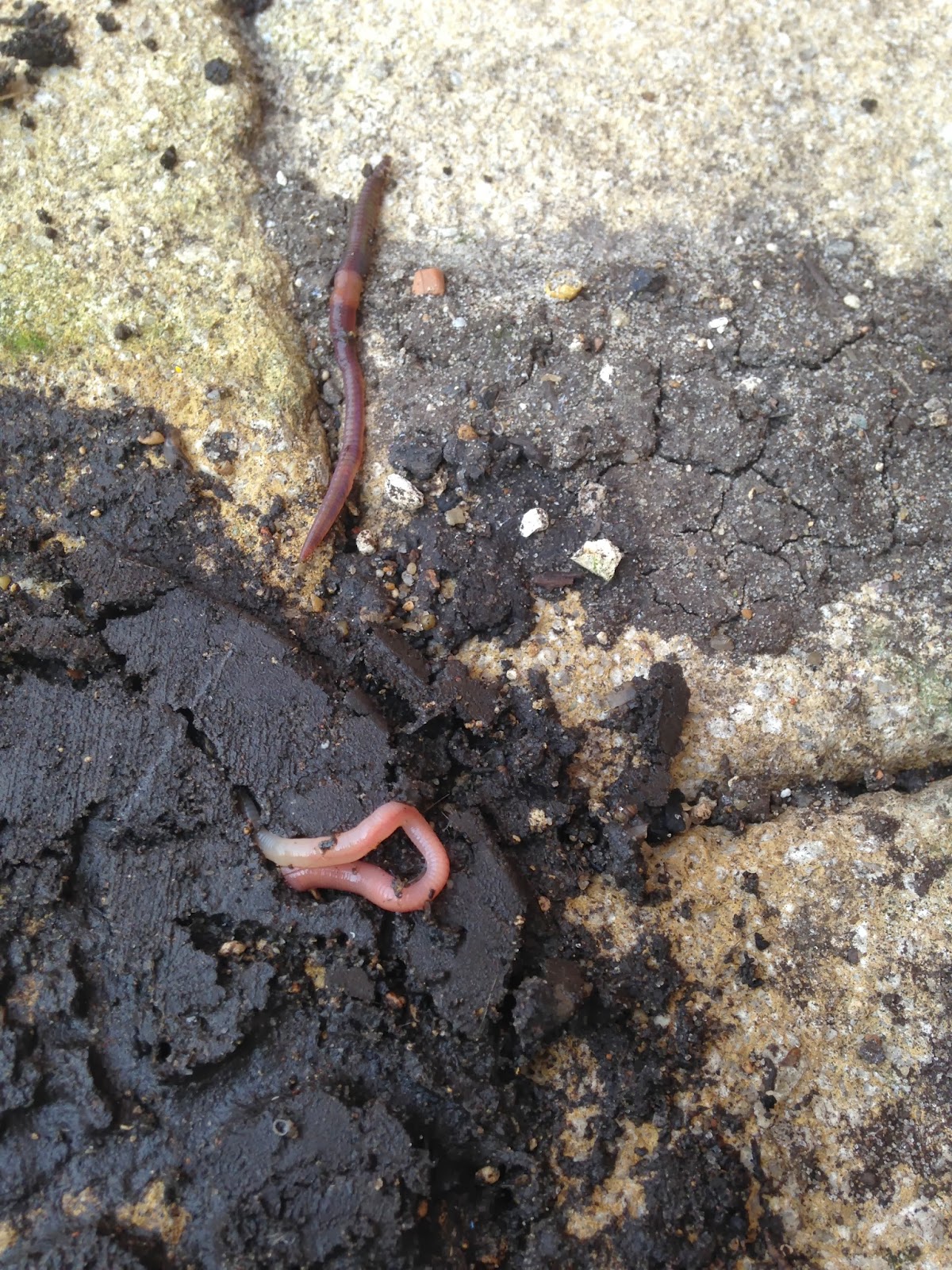
But no. Out I went to feel, the warm sun, taste outdoor coffee, touch worms, look at the yellow daffodils and smell the mint growing again in the patio pot, and the cat poo unearthed in the garage.

Being outdoors is healing. Dirty fingernails, walking on the springy moss (we don't have lawn, just moss) and noticing the rhubarb has suddenly sprouted again lifts the spirits in a way no amount of abstract thinking can do, even with a new book sitting unread.

I was perturbed by Giles Fraser's article in the Guardian today...
http://www.theguardian.com/commentisfree/belief/2014/mar/07/secular-lent-pale-imitation-real-thing (NB: Very fruity language alert in the first line, if you're sensitive to these things).

...as I realised that 'self growth', akin to what I am attempting this Lent, is not at all the same as soul searching for sin. Have I become nothing more than a liberal delusional, thinking that psychological development of my underused Myers Briggs side is a worthy task for the penitential season?

Interesting, that intersection of theology and psychology. Several times during training for the C of E I wondered if what was going on in the personal realm had a theological or a psychological explanation. For example, the temptation to harbour attitudes that are unwise and unhealthy, those little dark areas within that remain stubbornly un-healed - is that the devil or some area of human development you still need to go through? My evangelical friends would say the former, my liberal ones the latter.

In a stand against dualism I came to feel that both were
right. So whilst somewhat sharing Giles Fraser's queasy feeling about what he sees as doomed attempts at human betterment, I still think 'know thyself' is a good starting point for Lent.